

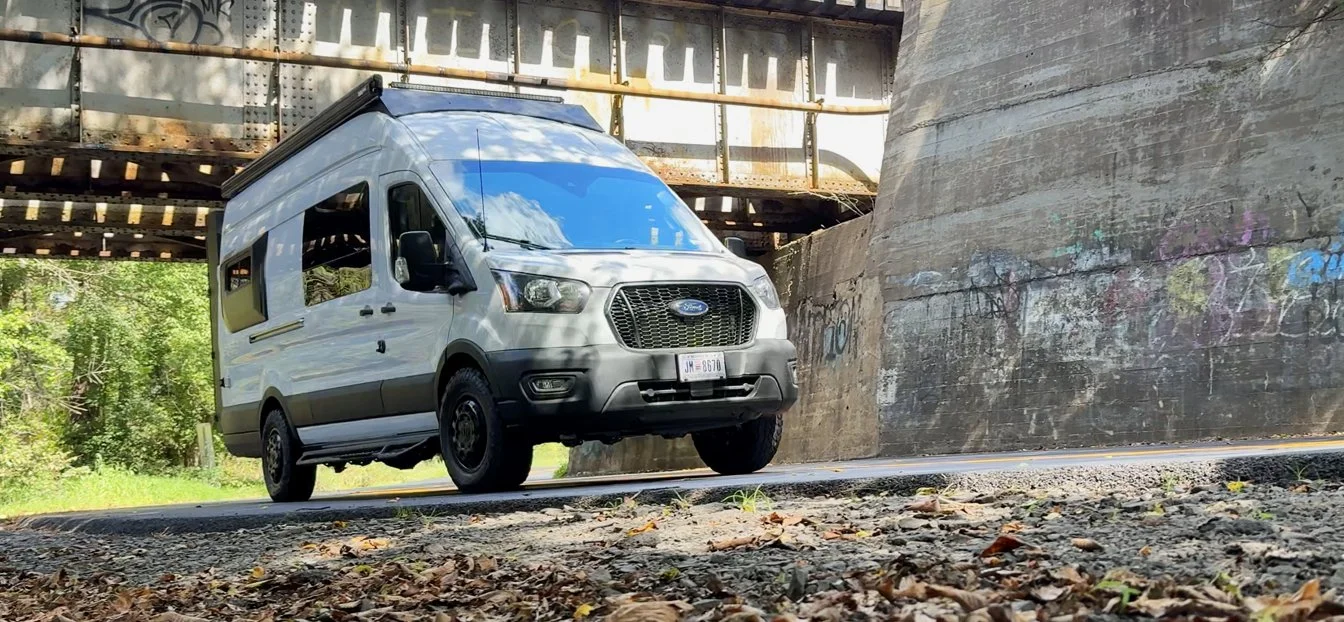
Working remotely from a camper van sounds like the ideal setup.
New views. More freedom. Less time stuck in one place.
And it can absolutely work.
But the reality is a little more grounded than what you see online.
From our experience, van life is comfortable for remote work if the van is built for it and expectations are realistic.
Here’s what we’ve learned from clients who are actually doing it.
Yes, it can work… if the van is designed for it
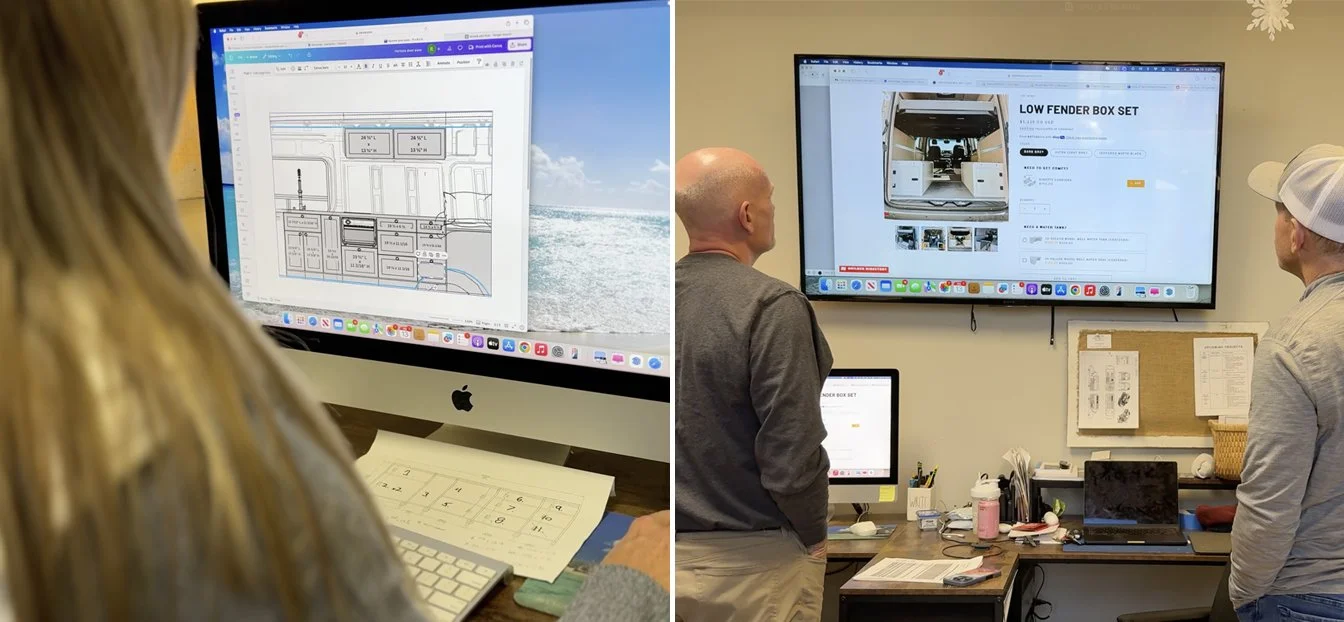
Remote work in a van isn’t something you “figure out later.”
The layout, systems, and overall flow need to support it from the beginning.
If they do, working from a van can feel natural and consistent.
If they don’t, even small issues become frustrating very quickly.
It’s less about chasing a perfect setup and more about making sure the basics are done right.
What remote work actually looks like in a van
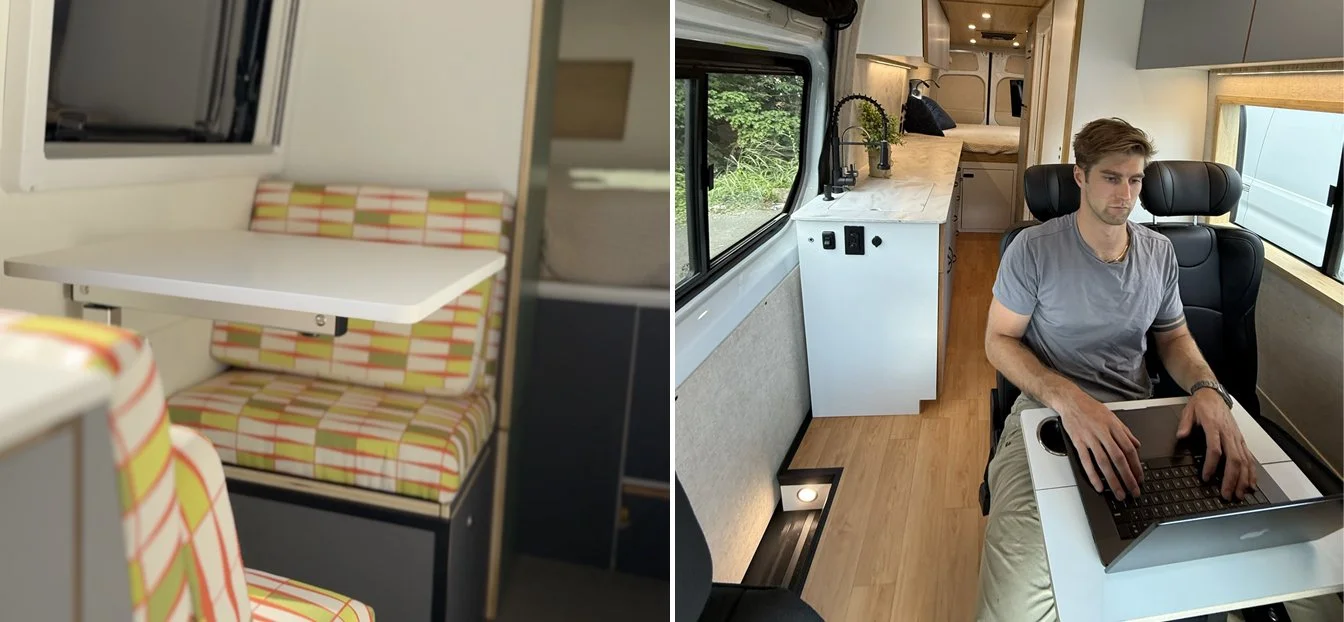
For most of our clients, remote work is pretty straightforward:
A laptop
A reliable internet connection (often Starlink)
A place to sit comfortably for a few hours at a time
It’s not a fully built office. It’s a simplified version of one.
The goal isn’t to recreate your home workspace.
It’s to create something that works well enough, consistently.
Where expectations don’t match reality
This is where most people get tripped up.
Connectivity isn’t guaranteed
One of the biggest misconceptions is that a cell booster solves everything.
We’ve had clients initially want to rely on a booster alone, without thinking about what happens when there’s no signal to boost.
If remote work is critical, you need to plan for reliable connectivity, not just convenient connectivity.
You’re not always working in the perfect setting
The idea of working from a scenic overlook sounds great.
The reality is that:
Glare on screens
Weather conditions
Temperature swings
…all affect how practical that setup actually is.
A lot of real work happens inside the van, or in less “Instagram-worthy” locations.
Two people working changes everything
One person working remotely is manageable.
Two people on calls at the same time is a different challenge.
This is where layout decisions start to matter more:
Can one person use the main space while the other uses the front cab?
Is there enough separation for calls?
These are the kinds of questions that don’t come up until you think through a real workday.
What actually makes it comfortable
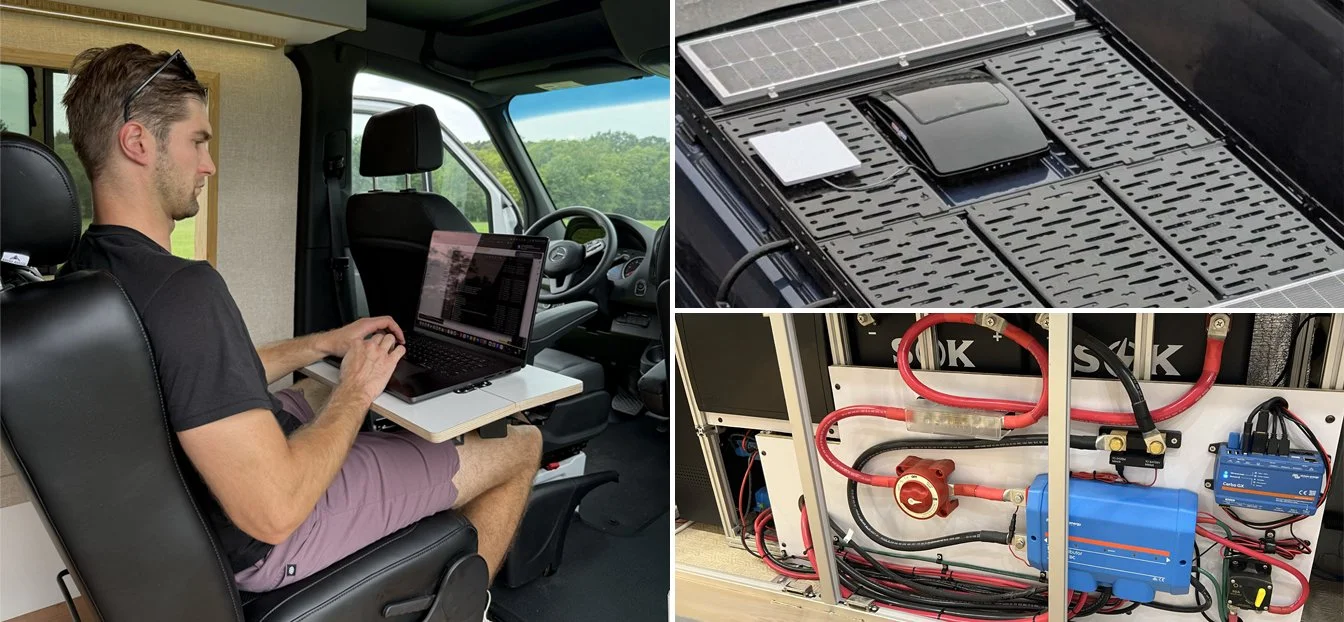
From our perspective, a few things make the biggest difference.
1. Power that can keep up
Battery and inverter sizing matter more than most people expect.
If you’re running laptops, charging devices, and potentially climate control during the day, your system needs to support that consistently.
Undersized systems don’t fail immediately.
They just make daily use more frustrating.
2. Reliable connectivity
If your work depends on being online, this is not the place to cut corners.
For many clients, that means:
Starlink
Backup options when needed
The goal is consistency, not just occasional access.
3. A usable workspace (not necessarily a dedicated one)
You don’t always need a full desk setup.
But you do need:
A comfortable place to sit
A surface that works for a laptop
Enough space to focus for a few hours
For two people, this often means using the van and the front cab in different ways at the same time.
4. Climate control
This is one of the biggest quality-of-life factors.
Working in a van that’s too hot or too cold isn’t sustainable, especially for longer workdays.
It’s not a luxury. It’s part of making the van usable.
What’s overrated
The biggest one we see is overly complex layouts.
People try to design a van that can do everything:
Dedicated office space
Convertible everything
Multiple work zones
In practice, that complexity often gets in the way.
Simple layouts tend to:
Be easier to use daily
Feel more open
Require less adjustment throughout the day
Again, it comes back to designing for how you’ll actually live and work, not every possible scenario.
What clients realize after using their vans
After spending time working remotely in their vans, most clients come back with a similar perspective:
It works better than expected when the basics are right
It’s not as “perfect” as the highlight reel
Simplicity makes a bigger difference than extra features
The biggest takeaway is usually this:
You don’t need a perfect setup.
You need a reliable one.
How this ties back to the build
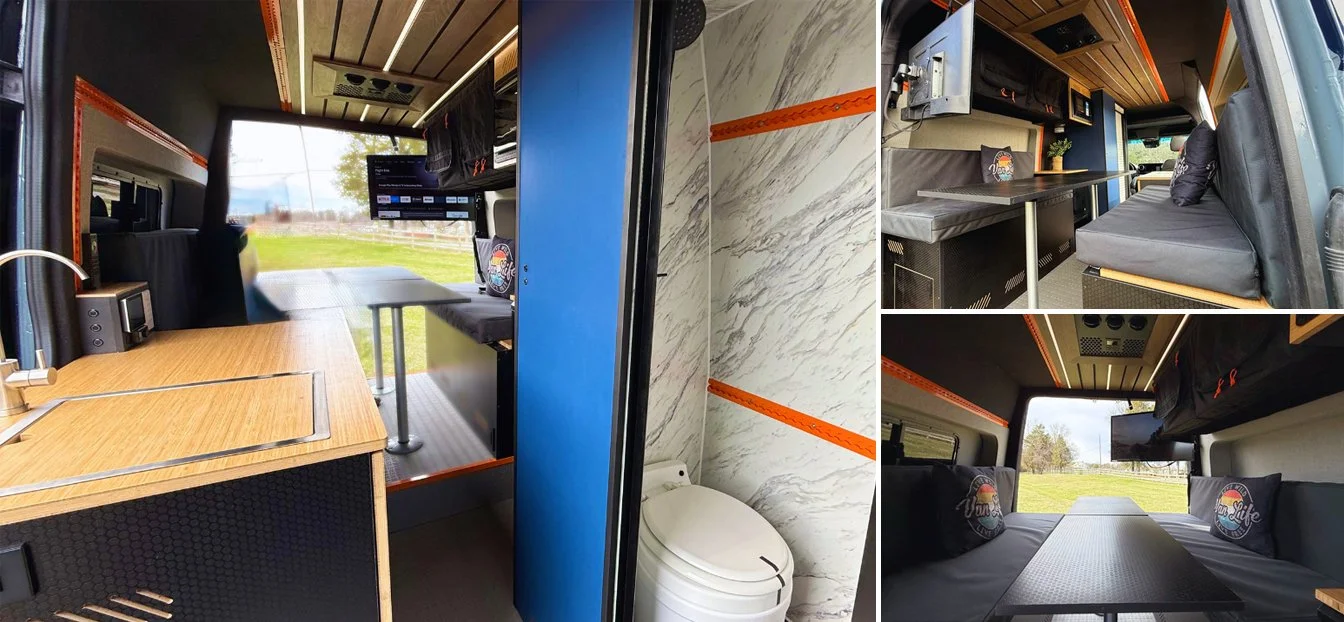
This is another area where a semi-custom approach tends to make sense.
Starting from a proven layout helps ensure:
The space functions well day to day
Work areas feel natural instead of forced
Systems are already sized appropriately
Then you can adjust based on how you plan to use the van, instead of designing everything from scratch.
Final thought
Van life and remote work can absolutely go together.
Just not in the way most people initially picture it.
The goal isn’t to create a perfect mobile office.
It’s to create a setup that supports your work without getting in the way of how you live.
If remote work is part of your plan, it’s worth designing for it early.
We’ll help you figure out what actually fits how you plan to live and work in your van, before you start building around assumptions.