

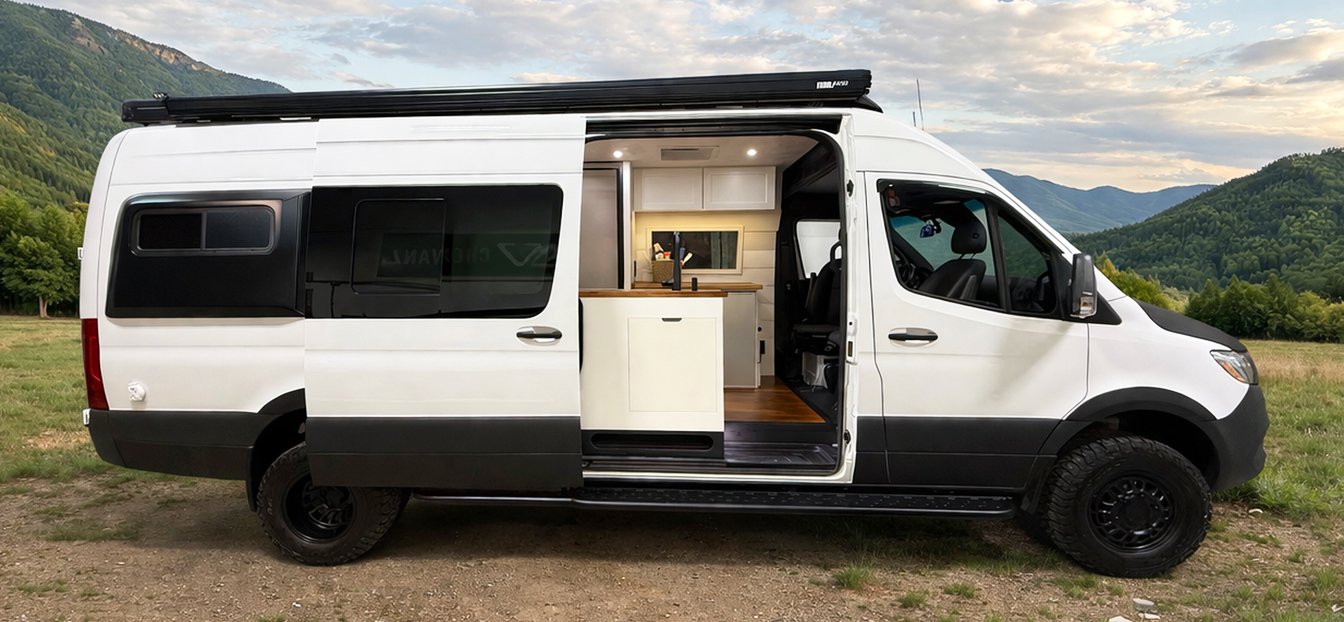
This is one of the first questions people ask, and one of the easiest to misunderstand.
If you’ve been researching online, you’ve probably seen everything from a few weeks to a few months. The reality sits somewhere in the middle, but the why behind that timeline matters just as much as the number.
At ChexVanz, we typically tell clients to expect 4 to 6 months from the start of design to final delivery.
Here’s what actually goes into that timeline.
The real timeline (and how it actually works)
A custom van build isn’t a straight line from start to finish. Multiple phases overlap, and progress often depends on what’s happening in parallel.
Here’s a realistic breakdown:
Design and planning: 2–4 weeks
Initial layout, revisions, and dialing in how the van will actually be usedCNC construction drawings: 6–8 weeks
Detailed drawings that guide the entire build process
(This often overlaps with early parts ordering)Parts sourcing: 4–10+ weeks
Components like windows, seat brackets, and electrical systems
(This runs alongside drawings and early build phases)Build phase: 6–10 weeks
Fabrication, installation, systems integration, and problem-solvingTesting, punch list, and delivery: 1–2 weeks
Final checks to make sure everything works the way it should
Because these phases overlap, the process is not purely linear. That’s part of what keeps projects moving while maintaining quality.
Why it takes longer than people expect
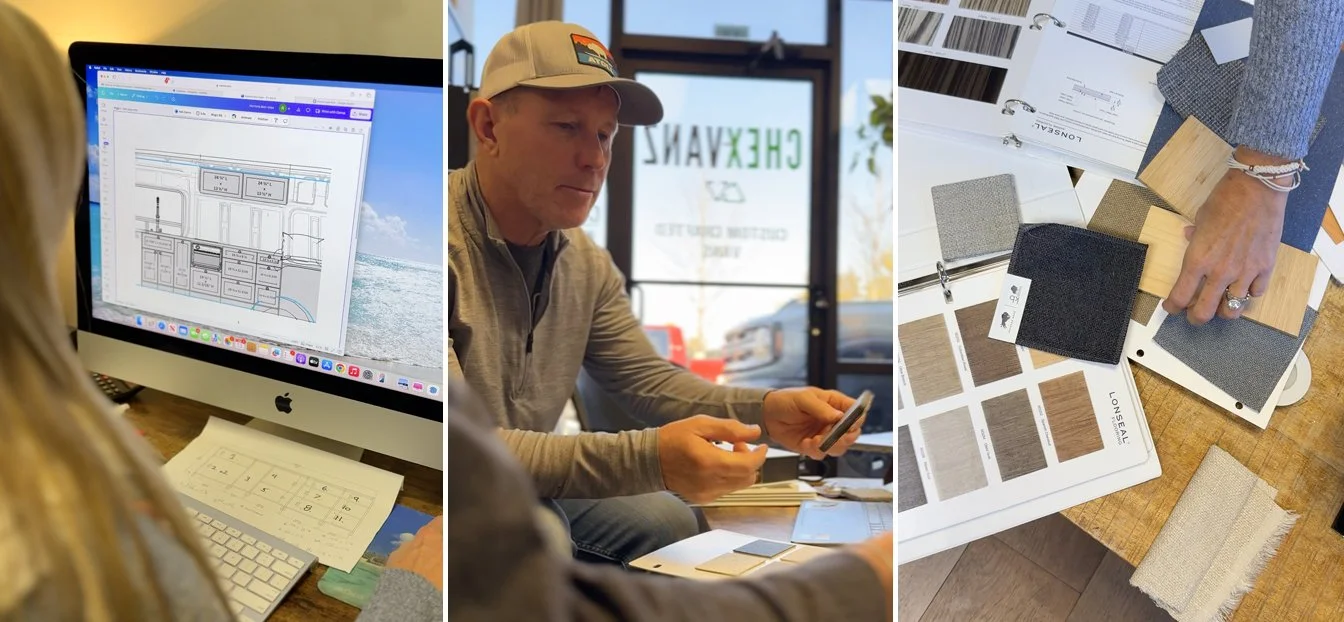
One of the biggest disconnects we see is expectation.
A lot of people come in thinking a van can be built in a month or two. We get questions like:
“Can this be done in 4–6 weeks?”
That assumption usually comes from comparing vans to factory-built RVs. But a custom camper van isn’t coming off an assembly line.
Every build involves:
Planning and layout decisions
Fabrication and installation
Integration of electrical, plumbing, and structural systems
Real-time problem-solving
Once people understand that everything is being built and integrated from scratch, the timeline starts to make more sense.
Where the time actually goes
The biggest thing people don’t see is problem-solving.
No two vans are exactly the same. Even with detailed drawings and proven systems, there’s always some level of adjustment during the build.
That might be:
Adapting a layout to fit real-world tolerances
Integrating new components
Making improvements based on past builds
We’re constantly refining our process to be more efficient, but custom work will always involve some level of real-time decision-making.
That’s where quality comes from.
What can slow a build down
There are a few common factors that impact timeline:
1. Waiting on specific components
Certain parts, like seat brackets, specialty windows, or electrical components, can take time to arrive, especially if they’re coming from overseas.
2. Client changes mid-build
Even small changes can have a ripple effect on sequencing, labor, and materials.
3. Delays in drawings or approvals
We don’t order major materials until drawings are finalized, so delays here push everything.
4. Client-supplied components
This is a big one. When clients bring in parts we haven’t used before, it adds time for testing, troubleshooting, and confirming compatibility.
Semi-custom vs fully custom: what changes
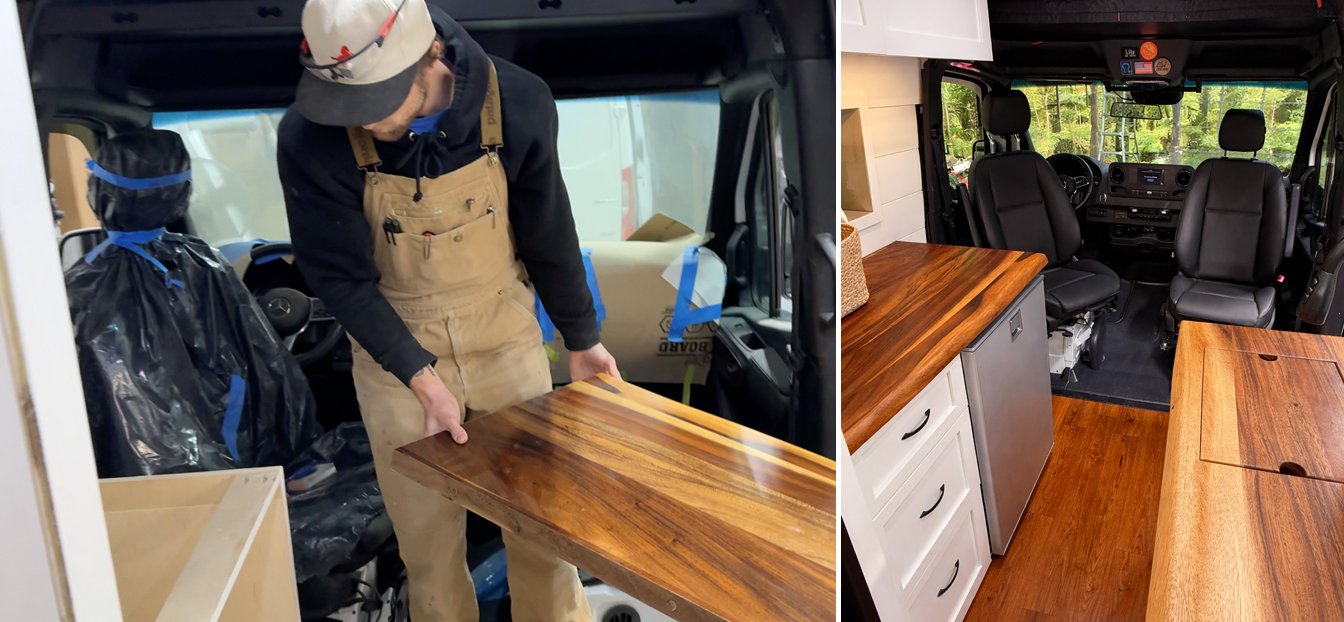
Both semi-custom and fully custom builds typically fall within the same 4–6 month window.
The difference is predictability.
Semi-custom builds are more streamlined
We’re working with layouts and systems we’ve already tested and refinedFully custom builds have more variability
More design time, more decisions, and often more unique challenges during the build
Neither is faster by default. One is simply more predictable than the other.
Why we don’t rush builds
Could we move faster? In some cases, yes.
But we don’t.
Rushed builds are where problems show up later.
We’ve seen vans come in from other shops with:
Leaks from poorly sealed roof penetrations
Electrical systems that weren’t done safely
Structural components that weren’t properly supported
Those issues almost always trace back to corners being cut to save time.
For something people rely on to travel and live in, that trade-off isn’t worth it.
How we keep projects moving
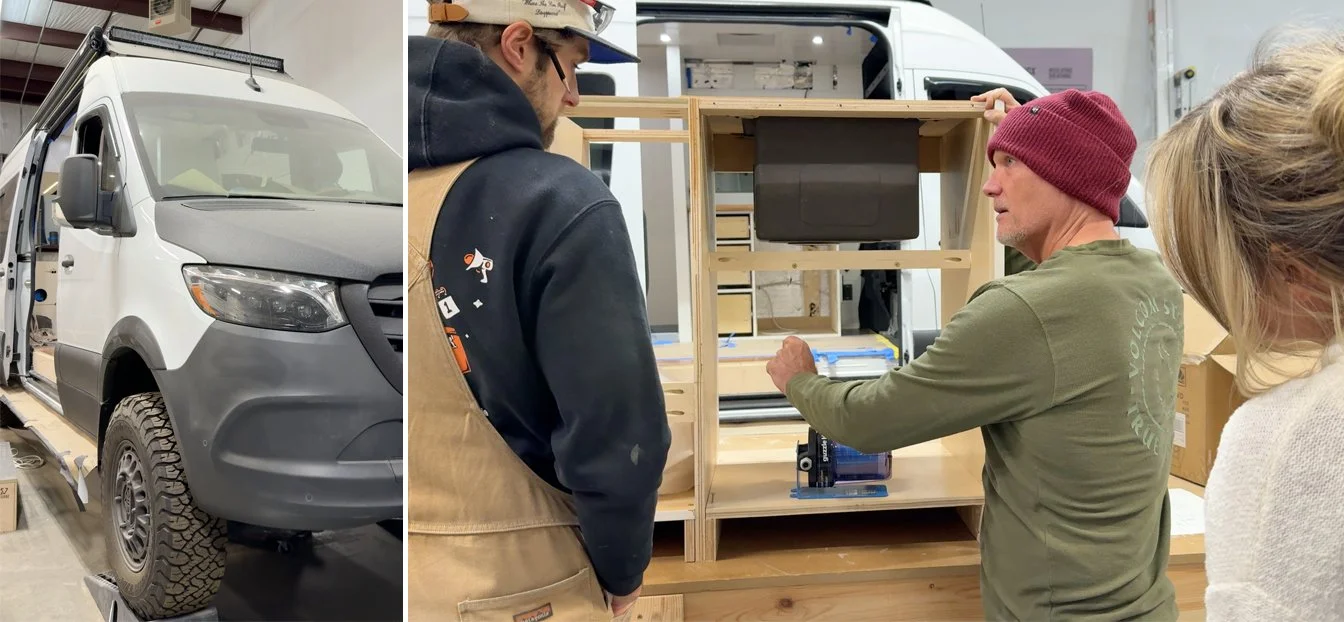
We do work on multiple vans at once, but it’s intentional.
Different phases happen in parallel:
One van may be waiting on parts
Another is in cabinetry
Another is in electrical
This approach keeps things moving without forcing one van through every step as fast as possible.
It allows us to stay efficient while still giving each build the attention it needs.
A real-world example
We’ve had builds go smoothly right within that 4–6 month window when:
Decisions were made quickly
Components were readily available
On the flip side, we’ve also seen builds delayed by something as simple as seat brackets stuck in customs.
One component can hold up a larger portion of the build sequence. That’s why we build in a buffer and set expectations early.
Final thought
A custom camper van isn’t something pulled from inventory. It’s a system of systems, built to work together in the real world.
Time spent upfront leads to fewer problems later.
If timeline matters to you, it’s best to start the conversation early.
We’ll walk you through what your specific build will realistically look like, so you know what to expect before you commit.