

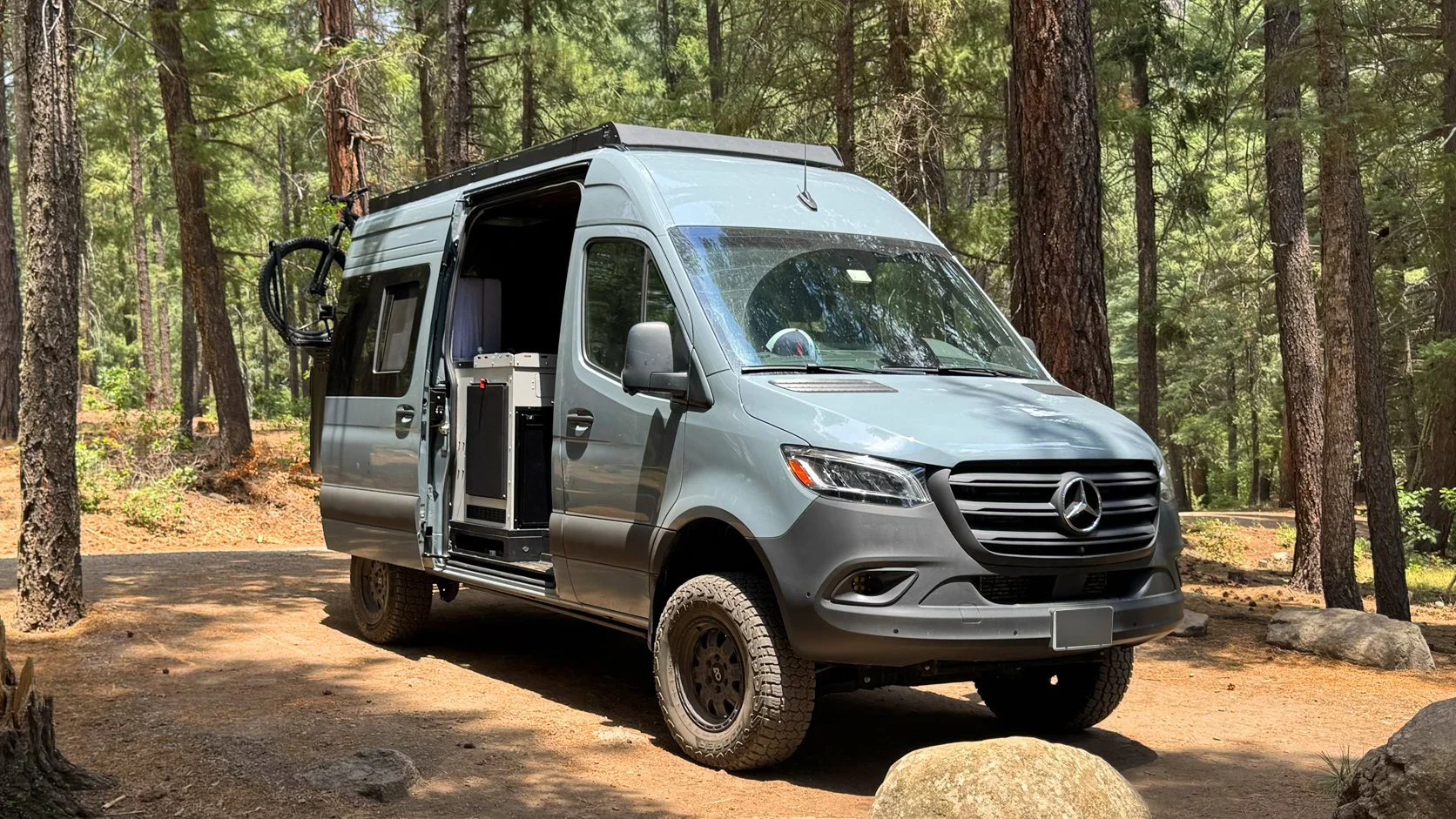
Don't Buy the Builder.
Buy the Process.
Shopping for a custom camper van can be exciting. It can also be overwhelming.
A quick search will show dozens of builders, beautiful Instagram feeds, and polished websites. Every van looks incredible. Every builder promises quality craftsmanship. Every quote seems a little different.
So how do you know who to trust?
The truth is, choosing the right builder has very little to do with who has the prettiest photos.
It has everything to do with how they build, how they communicate, and what happens after you drive away.
At ChexVanz, we've seen beautifully finished vans that hid serious problems behind the walls. We've also helped customers repair expensive mistakes made by other builders.
If you're making a six-figure investment, here are the things we believe every buyer should know before signing a contract.
Two Vans Can Look Almost Identical...
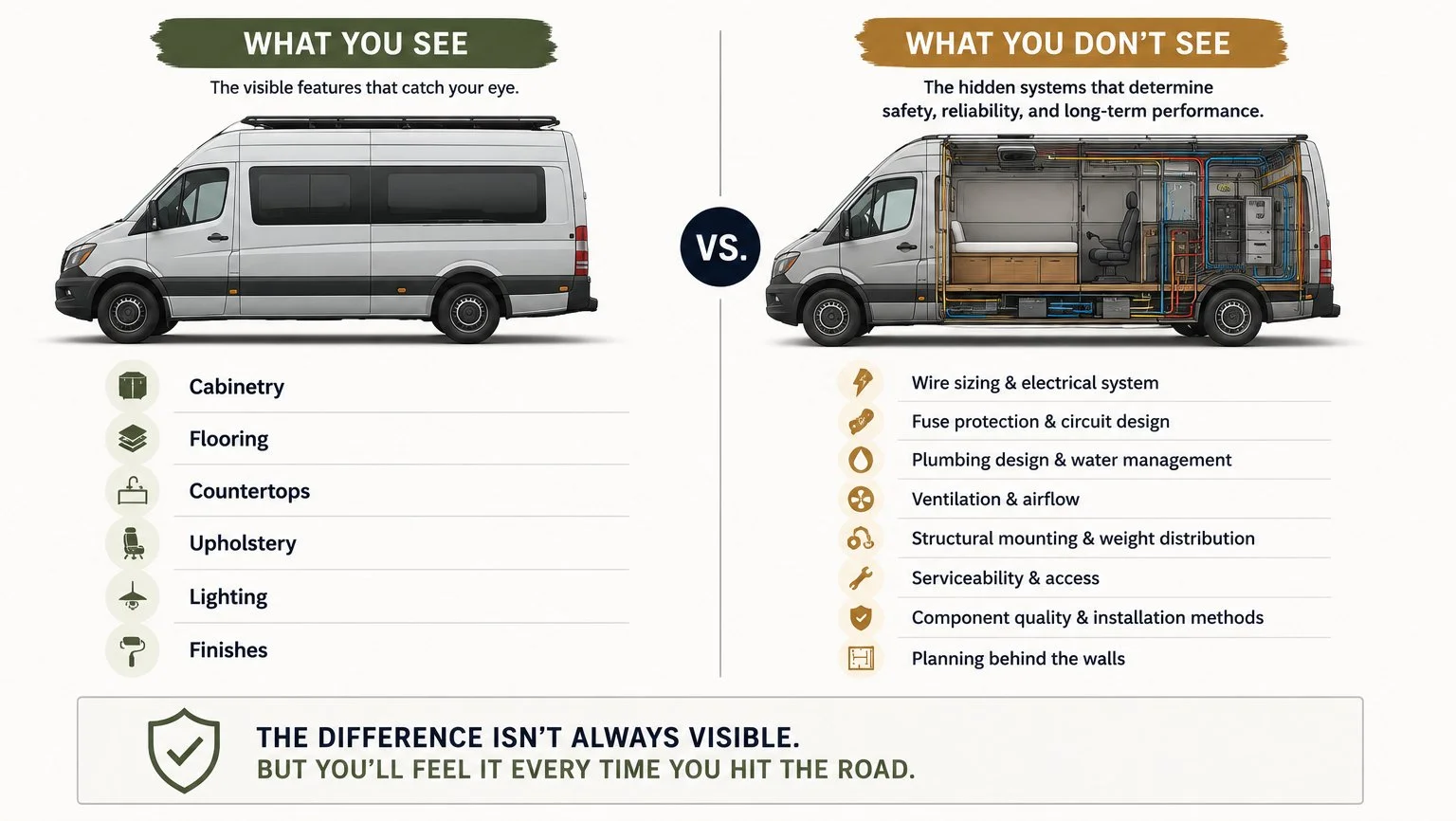
...and perform completely differently.
This is one of the biggest misconceptions we see.
Two vans may have the same cabinetry, flooring, countertops, and appliances. They may even look nearly identical on social media.
What you can't see is often what determines whether that van provides years of reliable adventures or becomes an expensive source of frustration.
The things that matter most are usually hidden:
Properly sized electrical wiring
Thoughtful plumbing design
Ventilation around refrigerators and electrical equipment
Secure mounting for heavy components
Serviceable electrical and plumbing systems
Careful planning before construction ever begins
These details rarely make it into Instagram posts, but they're the details you'll appreciate years from now.
The Cheapest Quote Often Becomes the Most Expensive Van
Price matters.
But price alone should never determine your builder.
One of the biggest mistakes buyers make is assuming every builder is using similar materials, similar processes, and similar quality standards.
They're not.
Sometimes a lower quote simply reflects different business overhead.
Other times, it reflects corners being cut where you can't see them.
We've reviewed estimates where the component list was vague, the electrical system wasn't clearly defined, and major decisions hadn't even been made before asking for a deposit.
That should raise questions.
Not because every inexpensive builder does poor work.
But because transparency matters.
A builder should be able to clearly explain what you're buying, why they chose those components, and how they'll perform over the long term.
As we often tell prospective clients:
The cheapest quote often becomes the most expensive van to own.
A Good Builder Should Have Nothing to Hide
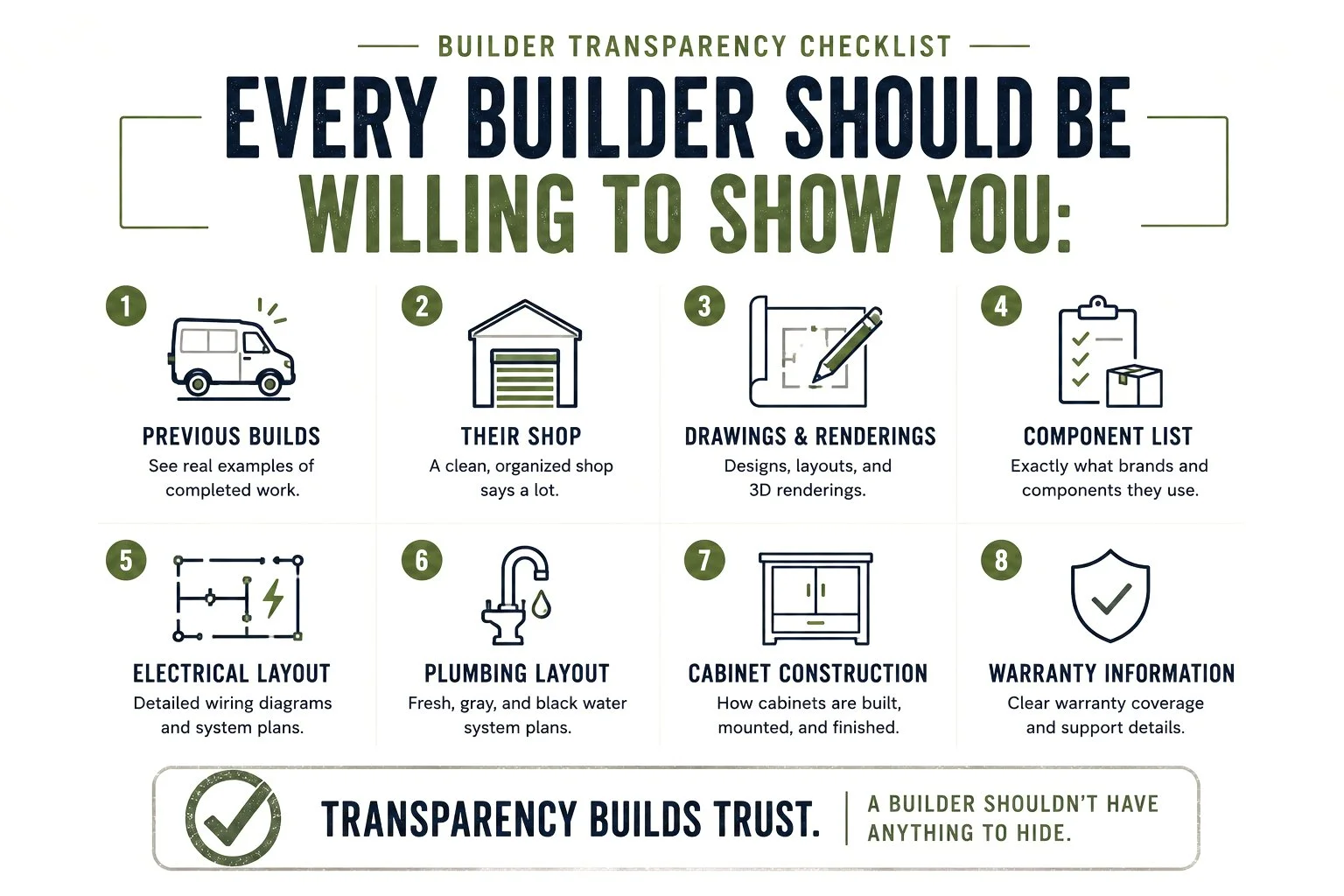
One of the easiest ways to evaluate a builder is simply by asking questions.
A reputable builder shouldn't hesitate to show you:
Previous completed builds
Their shop
Construction drawings or 3D renderings
The specific components they install
Electrical and plumbing layouts
Cabinet construction methods
How heavy components are mounted
Warranty information
Transparency builds trust.
If someone seems reluctant to explain their process or answer your questions, that's worth paying attention to.
Ask Better Questions
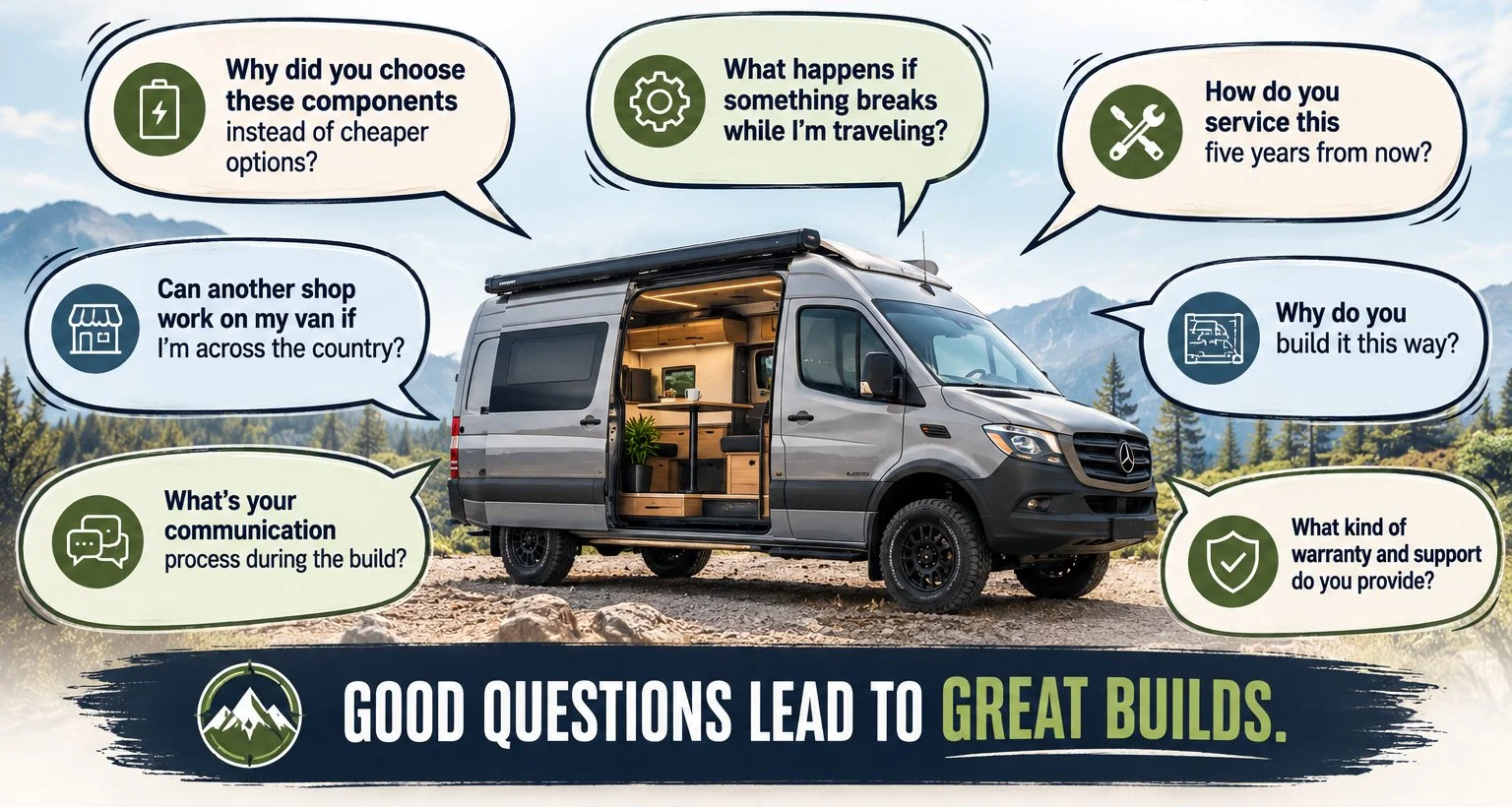
Many buyers focus on the wrong questions.
Instead of asking:
"How quickly can you build my van?"
or
"Can you beat this price?"
Try asking:
Why did you choose these components instead of less expensive options?
What happens if something breaks while I'm traveling?
How do you service this five years from now?
Can another shop work on my van if I'm across the country?
Why do you build it this way?
Those questions shift the conversation from purchase price to long-term ownership.
And that's exactly where it should be.
Buy the Process, Not the Builder
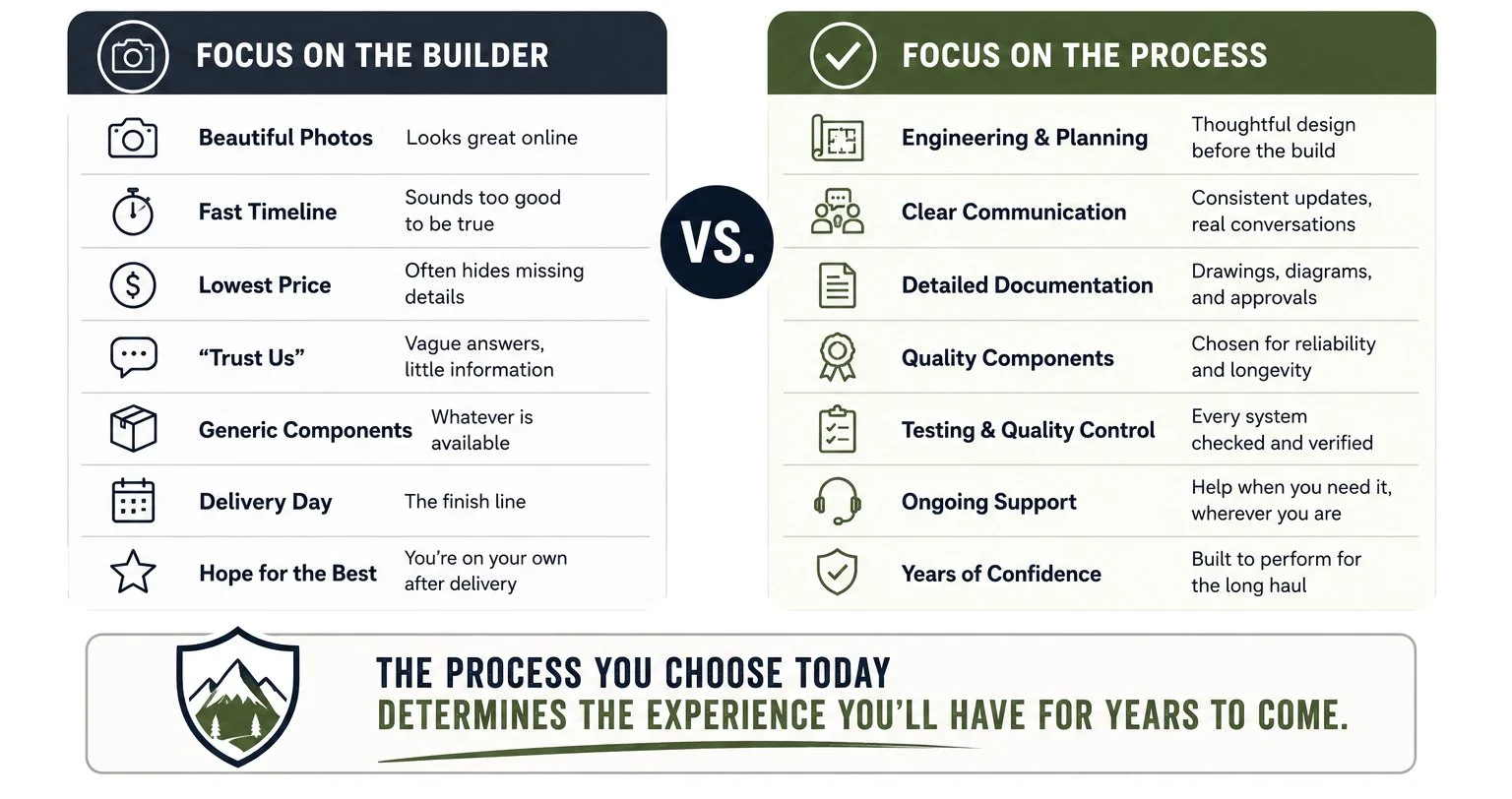
If we could offer one piece of advice, it would be this:
Don't buy the builder. Buy the process.
Every builder can promise quality. The real question is:
How do they get there?
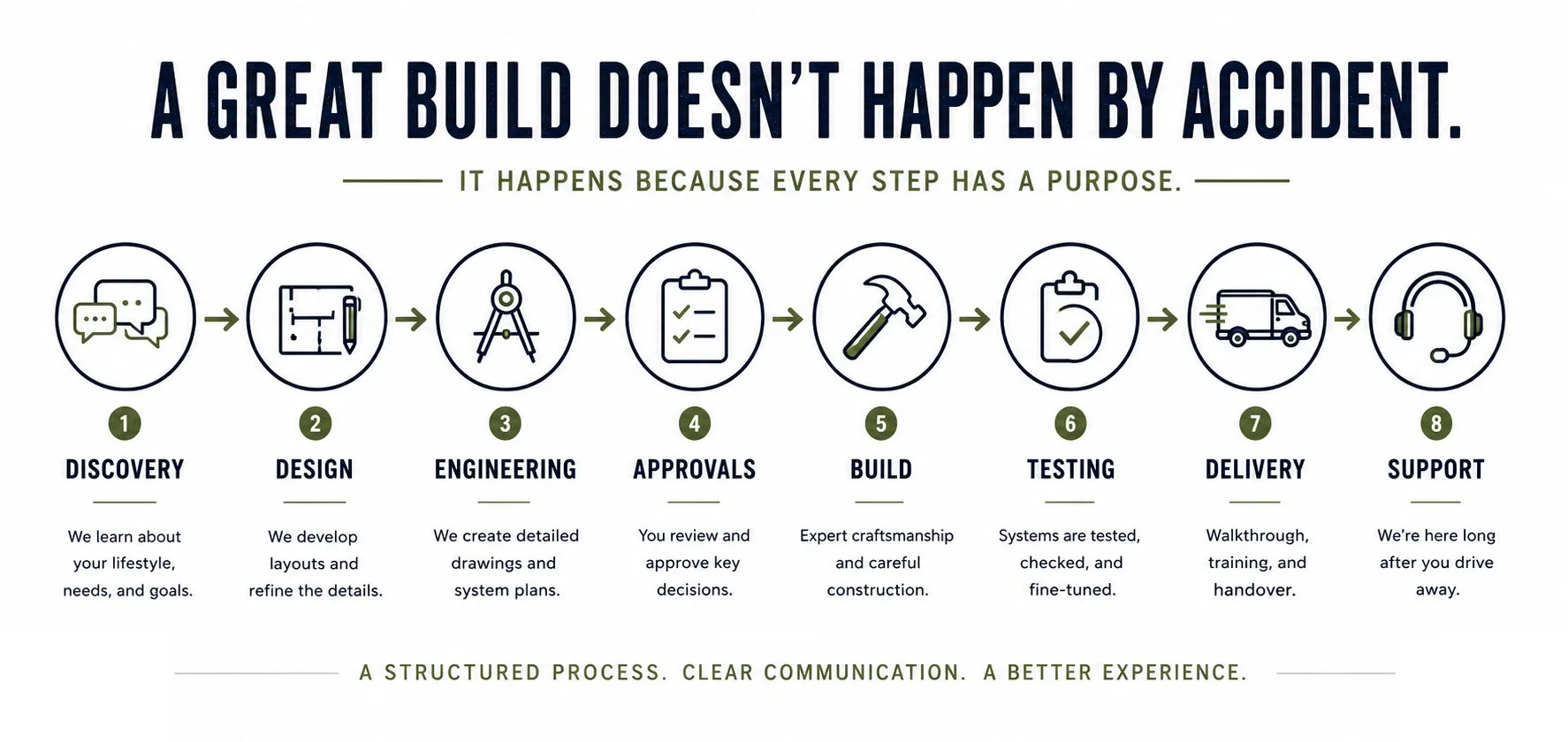
At ChexVanz, every project follows a structured process that includes:
Discovery and planning
Layout development
Engineering drawings
Component selection
Client approvals at key milestones
Construction
Testing and quality control
Delivery
Ongoing support
That process isn't about slowing things down.
It's about reducing surprises, catching problems before they happen, and building a van that's designed to last.
Communication Matters More Than You Think
Building a custom camper van takes time. It also requires hundreds of decisions. Throughout the build, communication should never disappear.
At ChexVanz, we typically provide progress updates every couple of weeks while active work is underway. If we reach a major milestone or need a decision sooner, we don't wait for the next scheduled update.
Some decisions become difficult—or even impossible—to change later.
That's why we confirm important details such as cabinetry layouts, upholstery, finishes, and major component selections before construction moves forward.
Good communication doesn't just keep clients informed.
It helps prevent costly mistakes.
Delivery Shouldn't Be Goodbye
A custom camper van isn't like buying a refrigerator.
You're taking a complex vehicle on adventures that may be hundreds or thousands of miles from the shop that built it.
Support shouldn't end when you drive away.
Our philosophy is simple:
We never want a customer to feel stranded because they bought one of our vans.
Whether that's a phone call, a FaceTime session, remote troubleshooting, or coordinating with a local repair shop, we're committed to helping our customers long after delivery day.
Because building the van is only part of the relationship.
Helping you enjoy it is the rest.
Fixing Someone Else's Mistakes Is Almost Always More Expensive
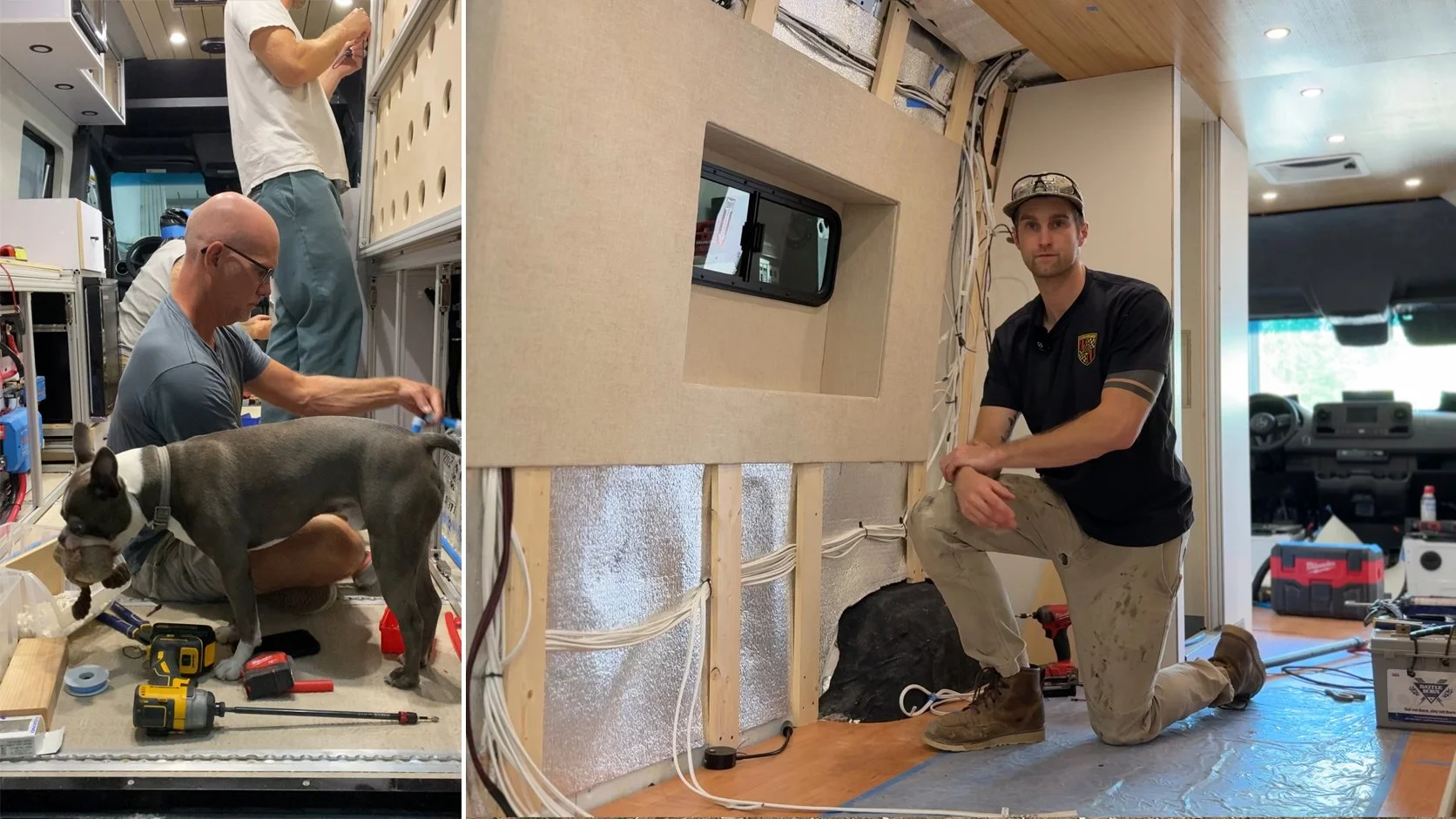
Over the years, we've seen our share of vans built elsewhere.
The biggest problems usually aren't cosmetic.
They're hidden behind finished walls.
We've encountered:
Electrical systems with poor wire management
Unlabeled wiring
Plumbing that couldn't be serviced without tearing apart cabinetry
Poor ventilation around critical equipment
Unsafe component installations
Builders who disappeared once the van was delivered
The lesson is always the same.
Fixing these issues almost always costs more than building the van correctly in the first place.
That's why we spend so much time planning before we ever cut the first piece of material.
One Final Piece of Advice
If you're about to invest $150,000 in a custom camper van, don't spend all of your time comparing photos.
Compare processes.
Ask how each builder plans the project.
Ask how they communicate.
Ask what happens if something breaks two years from now.
Ask how they service their own work.
Beautiful photos are easy.
Building a camper van that's safe, reliable, serviceable, and still performing years down the road is much harder.
That's the difference you're really paying for.
Choosing the Right Builder Is One of the Most Important Decisions You'll Make
Even if you don't choose ChexVanz, choose a builder who is willing to answer every one of these questions honestly and transparently.
A custom camper van is a significant investment, and you deserve to understand exactly how it's being designed, built, and supported long after delivery.
If you'd like to learn more about our process, we'd be happy to walk you through it, answer your questions, and help you determine whether ChexVanz is the right fit for your build.