


Buying a custom camper van is a major investment.
And yet, a lot of people choose a builder based on the things that are easiest to compare:
Beautiful photos.
Floor plans.
Price.
Delivery timelines.
Those things matter, but they don’t tell you how the van was actually built.
The most important parts of a camper van are often the parts you can’t see once the cabinetry, walls, and finishes are installed.
So before you sign a contract, ask better questions.
These are the 12 questions we believe every camper van buyer should ask any builder, including us.
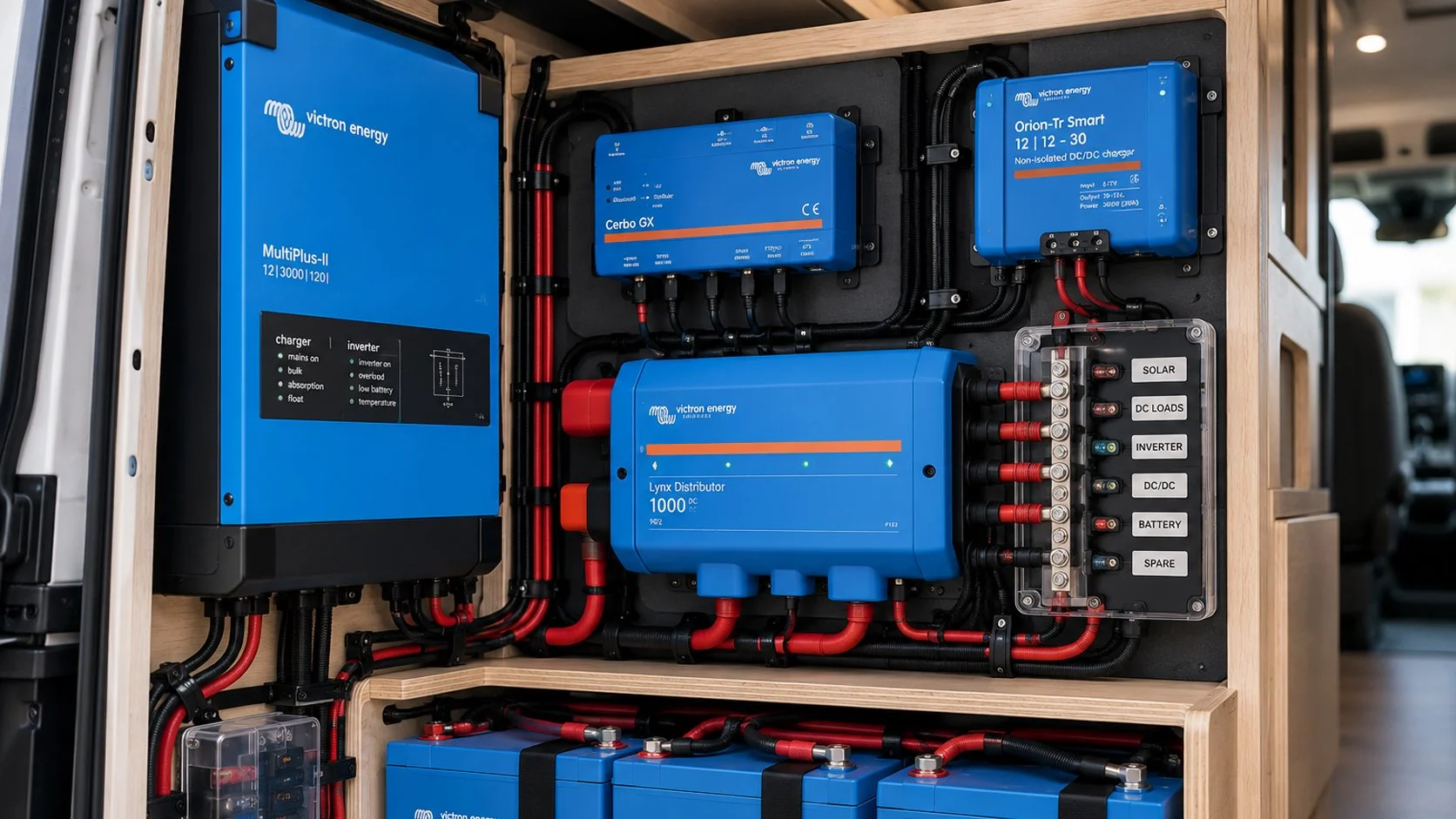
What Electrical Components Do You Use, and Why?
Why This Matters
A modern camper van electrical system is one of the most complex and expensive systems in the build.
It may include:
Lithium batteries
Inverter/charger
DC-to-DC charging
Solar
Shore power
Battery monitoring
Distribution and protection
At ChexVanz, we primarily use Victron Energy because it’s proven, widely used in marine and off-grid applications, and serviceable across the country.
But the brand name alone isn’t the point.
The system also needs to be properly sized for how you’ll actually use the van.
A remote worker running laptops and air conditioning has very different needs than someone taking occasional weekend trips.
A Good Answer Sounds Like
“We use these specific components because they’re reliable, serviceable, and appropriately sized for your expected loads.”
The builder should be able to tell you the exact brand and size of:
Battery bank
Inverter/charger
DC-to-DC charger
Solar controller
Shore power system
Solar array
Red Flag Answers
“We use whatever’s available.”
“They’re all basically the same.”
“You don’t really need to know.”
“We’ve always done it that way.”
If the builder can’t explain what they’re installing and why, keep asking questions.
Can I See Your Electrical Drawings or Build Documentation?
Why This Matters
A camper van is basically a tiny house being installed inside a vehicle where almost nothing is square.
Electrical systems, plumbing, cabinetry, tanks, appliances, HVAC, windows, seats, and structural components all have to coexist in a very limited amount of space.
One decision can affect five others.
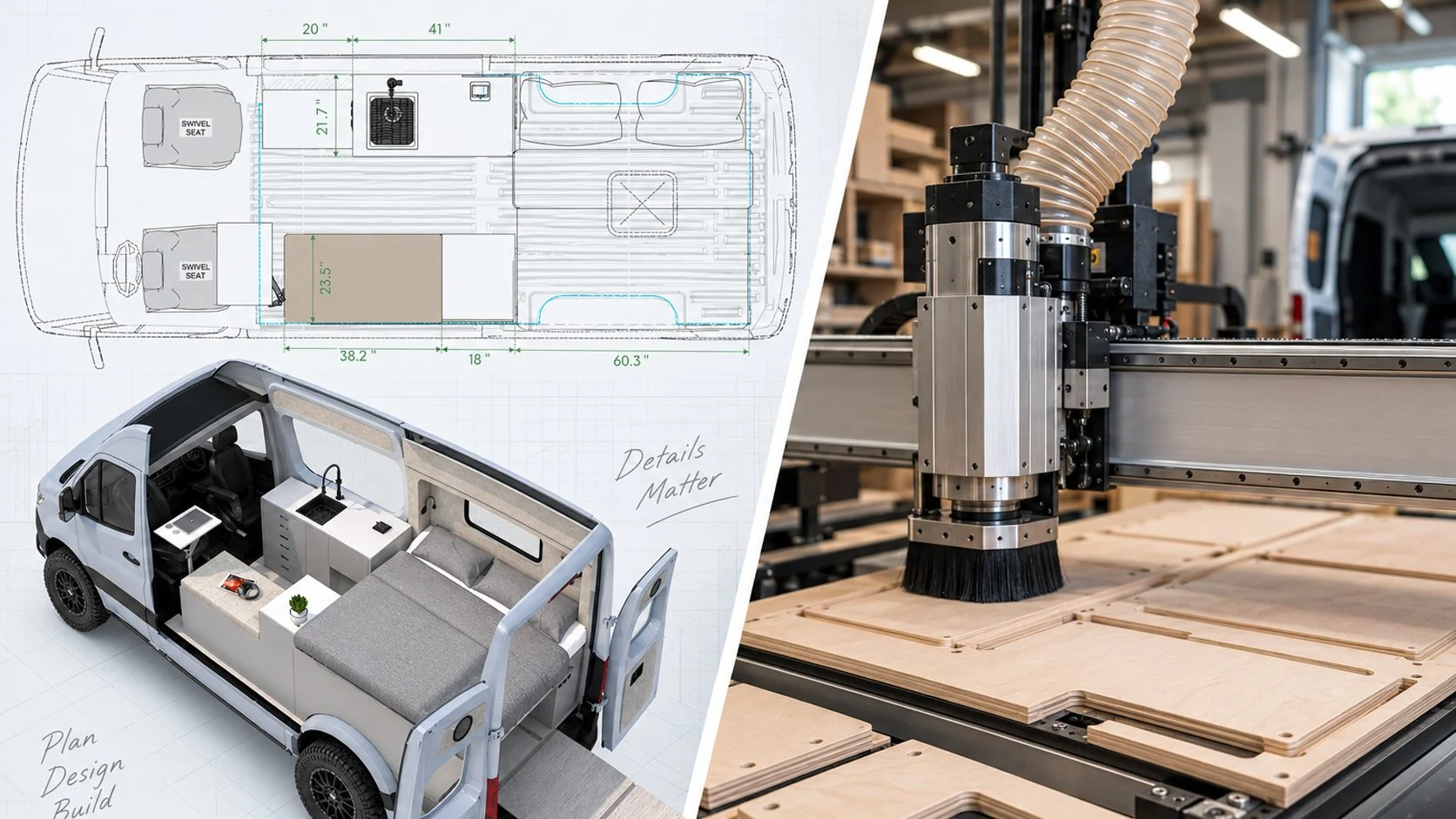
At ChexVanz, we plan builds digitally before cabinetry construction using 3D modeling and CNC-ready design files.
That gives everyone a roadmap before materials are cut.
A Good Answer Sounds Like
“We plan the build digitally, provide drawings, and document how major systems are intended to be installed.”
The builder should be able to explain:
Layout drawings
Electrical documentation
Major component placement
Construction planning
Client approvals
Red Flag Answers
“We don’t really make drawings.”
“We figure things out during the build.”
“The plans are all in our heads.”
Building without documentation can lead to expensive conflicts later.
A drain intersects a tank.
A refrigerator lacks ventilation.
A swivel seat hits cabinetry.
An electrical component becomes inaccessible.
Planning catches many of those problems before construction starts.
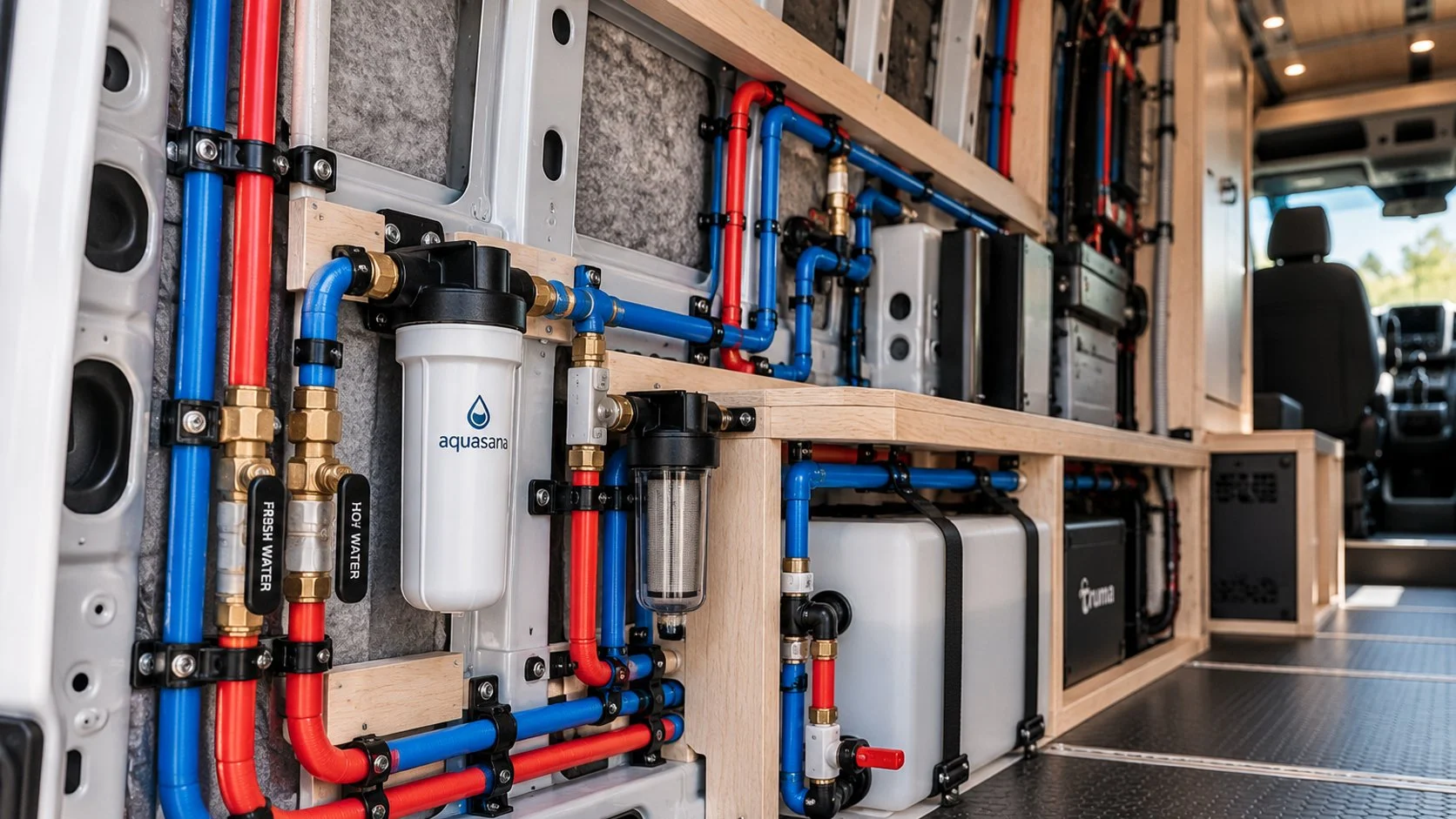
What Plumbing System Do You Use?
Why This Matters
Plumbing lives in a moving vehicle.
That means it deals with vibration, temperature swings, tight spaces, and thousands of miles of road use.
ChexVanz uses PEX-A with expansion fittings because it’s durable, flexible, and well suited to the demands of a vehicle.
But materials are only part of the equation.
How plumbing is supported, routed, protected, and accessed matters just as much.
A Good Answer Sounds Like
“We use a proven plumbing system designed for vibration and make sure critical connections remain accessible for service.”
Red Flag Answers
“You’ll probably never need to access it.”
“We bury everything so you don’t see it.”
“We just use whatever fits.”
Common problems include:
Poorly supported plumbing
Too many unnecessary fittings
Connections buried behind finished walls
Poor winterization planning
Lines rubbing against sharp surfaces
A finished van can hide all of those beautifully.
Until something leaks.
Can Another Shop Work on This Van If I’m Traveling?
Why This Matters
You probably won’t always be 20 minutes from the shop that built your van.
You may be 1,500 miles away.
That’s why we think about more than whether a component fits.
We think about whether someone can get to it again.
Pumps, filters, plumbing connections, electrical components, fuses, and shutoffs should not require destroying finished cabinetry to service.
A Good Answer Sounds Like
“Yes. We use widely supported components, document the systems, and design service access into the build.”
Red Flag Answers
“Only we know how to work on it.”
“You’ll have to bring it back here.”
“Nobody else should touch it.”
There’s an important difference between hidden and inaccessible.
A well-designed van can be clean and beautiful without becoming impossible to repair.
What Happens If Something Breaks While I’m Traveling?
Why This Matters
Delivery day should not be the end of the relationship.
Camper vans combine electrical, plumbing, HVAC, appliances, vehicle systems, and technology.
Questions will come up.
Things will eventually need service.
Great support means someone answers the phone.
A Good Answer Sounds Like
“We’ll help diagnose the problem, determine whether it’s something simple or requires service, and help you find the right solution wherever you are.”
ChexVanz has relationships with builders and technicians around the country, including former lead technicians now working in Colorado.
If a customer is traveling far from Virginia, we can often help connect them with someone we know and trust.
Red Flag Answers
“That’s between you and the component manufacturer.”
“Bring it back to us.”
“You’ll need to find someone locally.”
Our goal isn’t to build a van that only ChexVanz can service.
Our goal is to build it properly, document it clearly, and make sure customers have options wherever they travel.
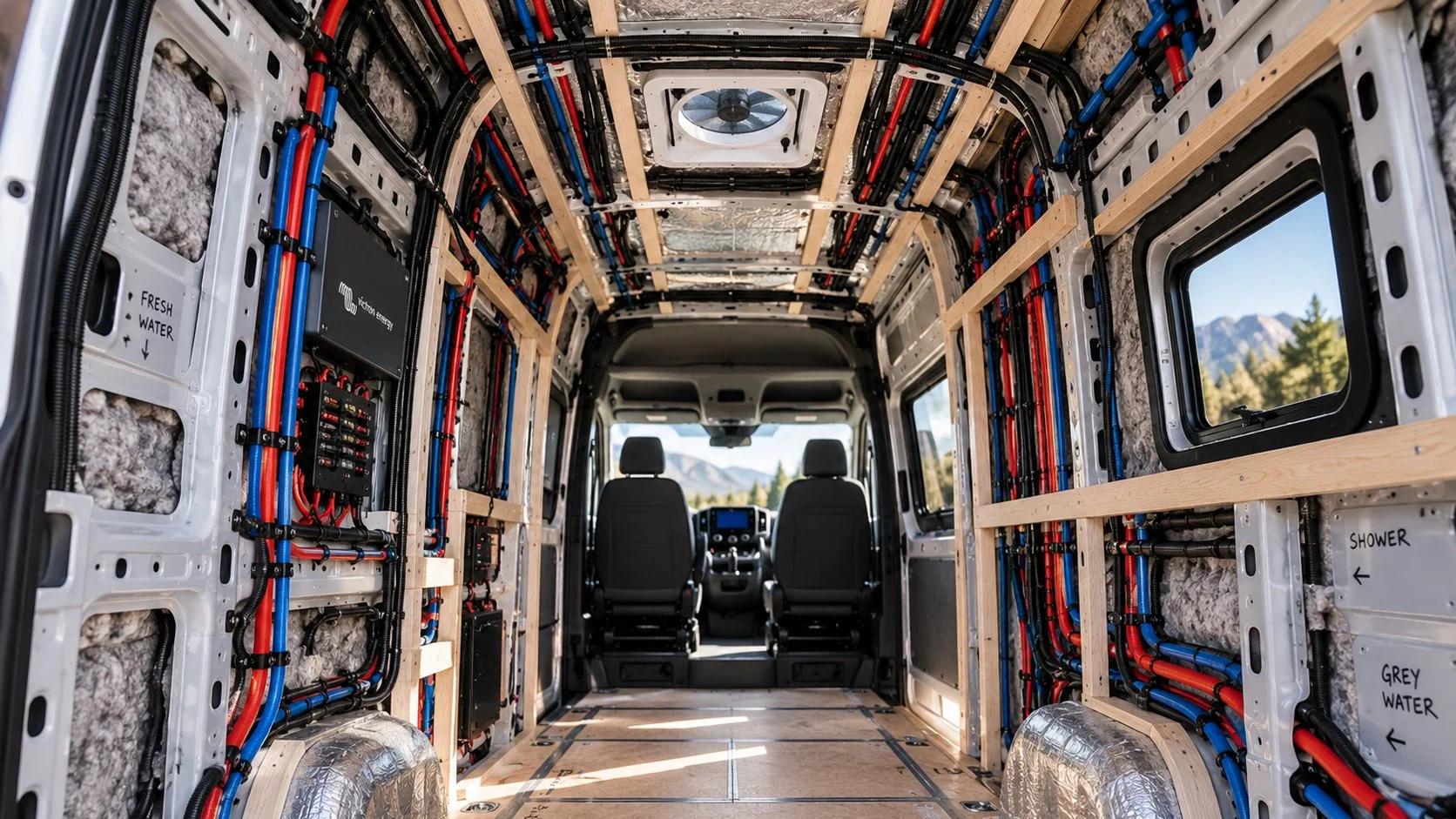
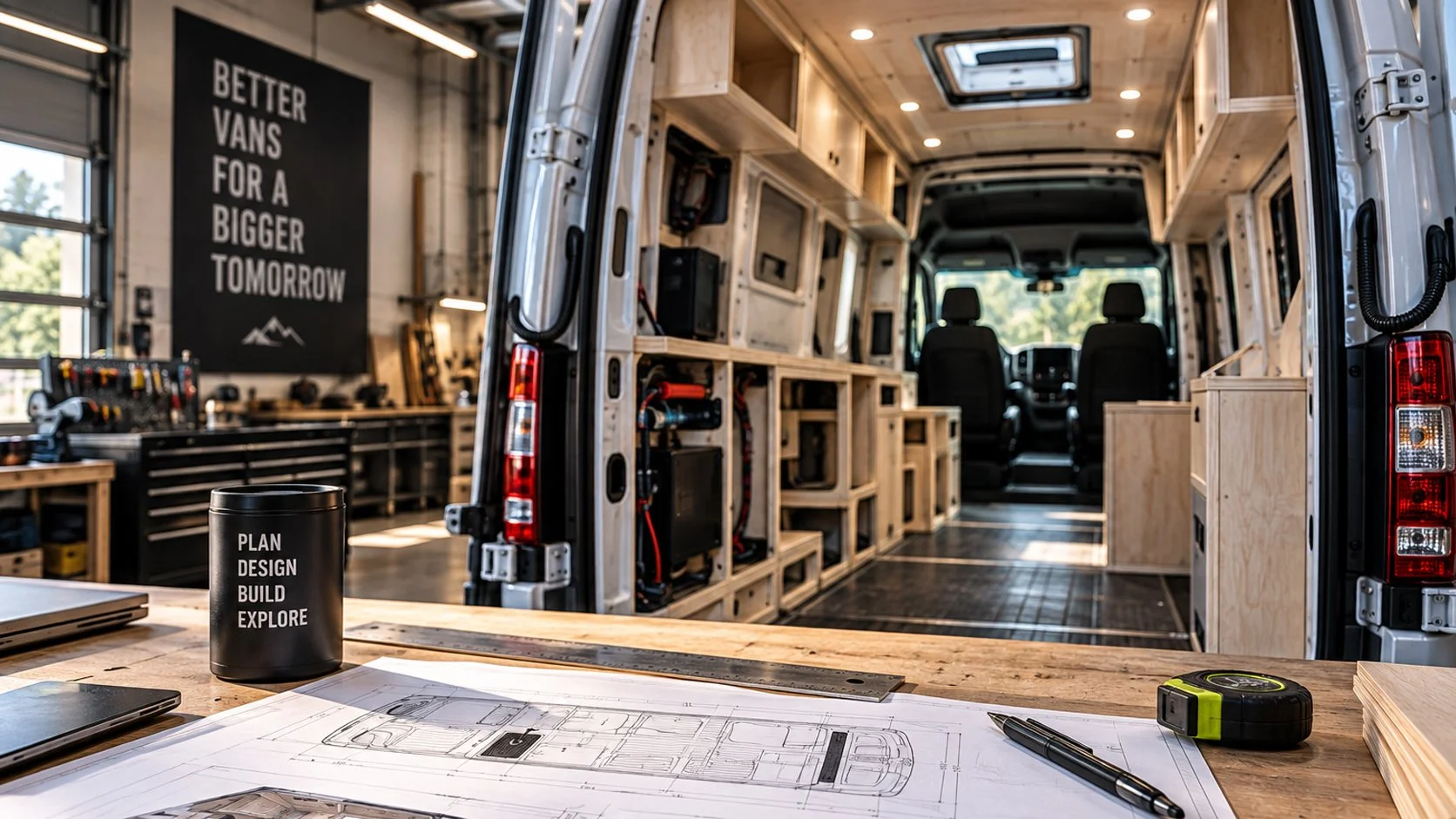
Can I See My Van Before the Walls Go On?
Why This Matters
This is one of the most revealing stages of a camper van build.
Because you can see everything that will eventually disappear.
If a customer walked through a ChexVanz build at this stage, we’d point out three things:
Wiring. Plumbing. Insulation.
What You Should See
Look for:
Organized wire routing
Proper wire protection
Secure plumbing
Protected penetrations
Clean insulation installation
Intentional workmanship
What Should Concern You
Loose wiring
Plumbing rubbing against metal
Unprotected sharp edges
Unsupported lines
Sloppy routing
Work that looks rushed or improvised
Once walls, ceilings, and cabinetry are installed, fixing hidden mistakes can mean removing thousands of dollars of finished materials just to reach the original problem.
Can I Tour Your Shop?
Why This Matters
Don’t just look at the finished vans.
Look at the half-built ones.
That’s where you learn the most.
What to Look For
Pay attention to:
Wiring
Plumbing
CNC cabinetry
Materials
Components waiting for installation
Organization
Workmanship in progress
A fabrication shop doesn’t need to look like a surgical suite.
Building vans is messy.
But there should be a clear difference between active construction and chaos.
Red Flags
Questionable wiring
Loose components
Sloppy unfinished work
Cheap materials
A builder who seems uncomfortable showing you work in progress
If someone only wants you to see the finished product, ask why.
How Will You Communicate With Me During the Build?
Why This Matters
Good communication starts before construction.
At ChexVanz, we work through:
Layout
Components
Materials
Finishes
Major design decisions
before the van enters active construction.
We use 3D modeling so customers can see what we’re proposing instead of trying to imagine it from a conversation.
A Good Answer Sounds Like
“We communicate throughout the design and build process, confirm major decisions before construction, and tell you if a change affects price or timeline.”
Red Flag Answers
“We’ll call if we need something.”
“You’ll see it when it’s finished.”
“We don’t really do progress updates.”
Changes happen.
But once construction begins, one change can trigger several others.
A moved cabinet may affect plumbing.
A deeper refrigerator may change the aisle.
A different seat may affect cabinetry.
You should understand those consequences before the builder moves forward.
What Does Your Warranty Actually Cover?
Why This Matters
“1-year warranty” sounds simple.
It isn’t.
Buyers should understand the difference between:
Builder craftsmanship warranty
Component manufacturer warranty
Vehicle manufacturer warranty
ChexVanz provides a 1-year craftsmanship warranty on our work.
If the problem comes from how something was installed or constructed, that’s a craftsmanship issue.
If a third-party appliance fails, its manufacturer's warranty generally applies.
The base vehicle remains covered by Ford, Mercedes-Benz, or the applicable chassis manufacturer.
A Good Answer Sounds Like
“Our warranty is written, specific, and clearly explains who is responsible for what.”
Red Flag Answers
“Don’t worry, we’ll take care of you.”
“We stand behind everything.”
“Everything is covered.”
Those statements sound reassuring.
But they’re not a warranty.
Why Did You Choose These Materials and Components?
Why This Matters
Camper vans live in a harsh environment.
They experience:
Vibration
Humidity
Temperature swings
Road movement
Constant use
The cheapest or lightest material is not necessarily the right one.
At ChexVanz, we use products such as:
Lonseal flooring
Quality HPL surfaces
Durable upholstery
CNC-cut cabinetry
Quality hardware
PEX-A plumbing
Established electrical and appliance brands
because we’ve learned where spending money matters.
A Good Answer Sounds Like
“We chose this because it performs better in a moving vehicle, lasts longer, or is easier to service.”
Red Flag Answers
“It was cheaper.”
“It was available.”
“It looks good.”
“We've always used it.”
Good builders evolve.
If a better component solves a recurring problem, improves serviceability, or has better manufacturer support, the process should evolve too.
How Do You Plan a Custom Build Before Construction Begins?
Why This Matters
This may be one of the most important questions in the entire guide.
At ChexVanz, we don’t “figure it out as we go.”
Because by the time you realize something doesn’t work, you may already have spent thousands of dollars building around it.
Our process includes 3D modeling and CNC design before cabinetry construction.
We work through the dimensions of:
Appliances
Tanks
Seating
Beds
Showers
Plumbing
Electrical equipment
Major components
because everything is competing for inches.
And sometimes, an inch matters.
A refrigerator that’s two inches deeper can change the aisle.
A deeper bench can interfere with a swivel seat.
Moving a shower can change window placement.
A water tank can interfere with equipment underneath the vehicle.
A Good Answer Sounds Like
“We plan the major systems together before construction and use drawings to eliminate as many conflicts as possible.”
Red Flag Answers
“We’ll know once we get into it.”
“We usually make it work.”
“We don't need detailed drawings.”
Surprises will happen in custom builds.
The goal is to eliminate as many expensive ones as possible before cutting material.
Five Years From Now, How Will This Van Be Serviced?
Why This Matters
We try to build for the person who owns the van five years from now, not just the customer picking it up tomorrow.
Because:
Appliances fail.
Pumps wear out.
Batteries age.
Technology changes.
Long-term ownership should influence decisions today.
A Good Answer Sounds Like
“We design access panels, use replaceable components, document systems, and make sure future technicians can understand how the van was built.”
Red Flag Answers
“Hopefully nothing breaks.”
“You’ll probably replace the van by then.”
“Don’t worry about that yet.”
The real question isn’t whether something will eventually need service.
It’s this:
When it does, did the builder make replacing it a two-hour service call or a two-day demolition project?
That difference matters.
Builder Red Flags at a Glance
If you hear answers like these, keep asking questions:
“We don’t really make drawings.”
“We’ll figure it out during the build.”
“You don’t need to know what’s behind the walls.”
“We use whatever components are available.”
“Bring it back if something breaks.”
“Only we can service it.”
“Trust us.”
A great builder shouldn’t be afraid of great questions.
One Final Piece of Advice
Almost every professionally photographed camper van can look beautiful.
Ask to see what’s behind the walls.
Ask how the electrical system was designed.
Ask what plumbing they use.
Ask to see drawings.
Ask how components can be accessed for service.
Ask what happens when you're 1,500 miles away, and something stops working.
Ask to tour the shop and look at a van that's halfway through construction.
Because the quality of a camper van isn't determined by what it looks like on delivery day.
It's determined by how it was built underneath and how well it still works years later.
Ready to Ask Better Questions?
Whether you're talking to ChexVanz or another builder, use this guide.
If you'd like to see how we answer all twelve questions, we'd be happy to walk you through our process, show you what goes into a build, and help you decide whether ChexVanz is the right fit for your van.