

Planning your first long camper van trip sounds exciting. And it is.
It’s also where a lot of overbuilt vans and overpacked storage start.
We see this all the time. People try to plan for every possible scenario before they’ve ever spent real time in a van. The result is usually the same: too much stuff, too many features, and a layout that looks great on paper but feels clunky in real life.
The good news is this is all avoidable with a slightly different approach.
Start with how you’ll travel, not where you’ll go
Most people start planning with destinations. That’s not where the real clarity comes from.
Instead, think about:
How many days you’ll be on the road
How often you’ll move vs stay parked
How much time you’ll spend inside the van
Whether you’ll be working, relaxing, or both
These answers shape your build far more than a map ever will.
A van designed for daily movement feels very different than one designed for staying parked for days at a time.
The overpacking trap
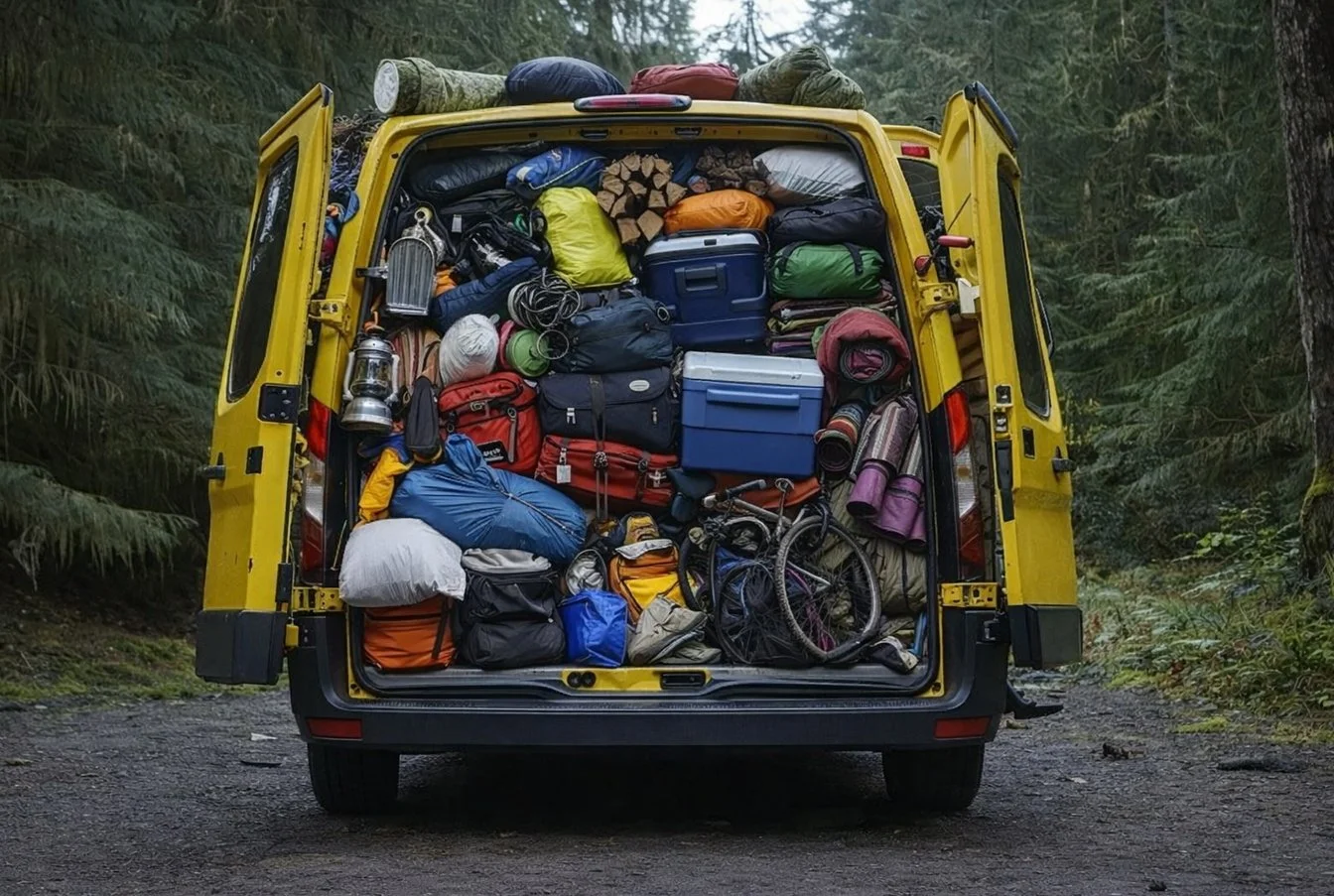
Once people take their first real trip, the feedback is almost always the same:
“We brought way too much stuff.”
Cabinets get filled with things that never get touched. Extra gear gets packed “just in case” and stays there the entire trip.
It makes sense. You’re trying to be prepared.
But what actually happens is:
Storage gets cluttered
Access becomes harder
The van feels smaller than it should
Most people don’t need more storage. They need better use of space and less stuff.
The overbuilding trap
Overpacking leads directly to overbuilding.
We see a few patterns over and over:
Too much storage
More cabinets sounds like a good idea until it just invites more things you don’t use.
Too many systems
Backup systems, extra add-ons, “just in case” features. More complexity usually means more things to maintain or fix.
Overly complex layouts
Convertible everything. Multi-use everything. It sounds efficient, but daily use becomes frustrating.
Designing for “what if”
“What if we’re off-grid for 10 days?”
“What if it rains for a week?”
“What if someone joins us?”
Designing for extremes usually makes the van worse for everyday use.
What actually changes when you plan a real trip
This is where things click.
When you think through a real trip instead of a perfect scenario, your priorities shift quickly.
Layout becomes clearer
You start to understand how you’ll move through the space every day. That affects bed setup, seating, and overall flow.
Power needs become realistic
Instead of guessing, you think in terms of actual use:
Laptops
Cooking
Heating or cooling
You design for what you’ll actually run, not what you might run once.
Storage becomes intentional
It’s no longer “how much can we fit?”
It becomes “what do we actually use every day?”
Comfort beats features
Ease of use starts to matter more than having every possible option.
The biggest realization most people have
After their first trip, people almost always say some version of this:
“We didn’t realize how little we actually need.”
Real life in a van is simpler than most people imagine.
That’s why trying to design for every possible scenario upfront usually leads to unnecessary complexity.
Advice we give all the time
These are things we say to clients regularly, because they hold up in the real world:
Start with a shorter trip first
Even a weekend will teach you more than months of planning.You don’t need as much as you think you do
This applies to both packing and the build itself.You’ll figure it out as you go
No build is perfect on day one, and that’s okay.Don’t design for the 1% scenario
Build for how you’ll use it 90% of the time.Simple always wins
It’s easier to use, easier to maintain, and more enjoyable day to day.
Where semi-custom starts to make more sense
This is also where a semi-custom approach tends to shine.
Starting from a proven layout helps avoid overbuilding because:
The core functionality is already worked out
The flow of the space has been tested
You’re not solving problems that don’t need solving
Then you layer in personalization where it actually matters to you.
It’s a balance between flexibility and simplicity, which usually leads to a better experience on the road.
Final thought
Your first long trip doesn’t need to be perfect. It just needs to be real.
The goal isn’t to predict everything. It’s to build something that works well for how you actually live and travel.
The rest, you’ll figure out as you go.
and…
If you’re planning your first trip and trying to decide what your van actually needs, we’re happy to help you think it through.
We’ll help you figure out what actually fits how you plan to travel, before you overpack or overbuild.