


One of the most common questions we hear is deceptively simple:
“Can we add a bathroom?”
The short answer is yes.
The longer, more honest answer is that a bathroom is one of the biggest design and cost drivers in a camper van build, and it needs to be planned early.
Here’s what a bathroom really adds to a van, beyond just convenience.
A bathroom is a system, not a feature
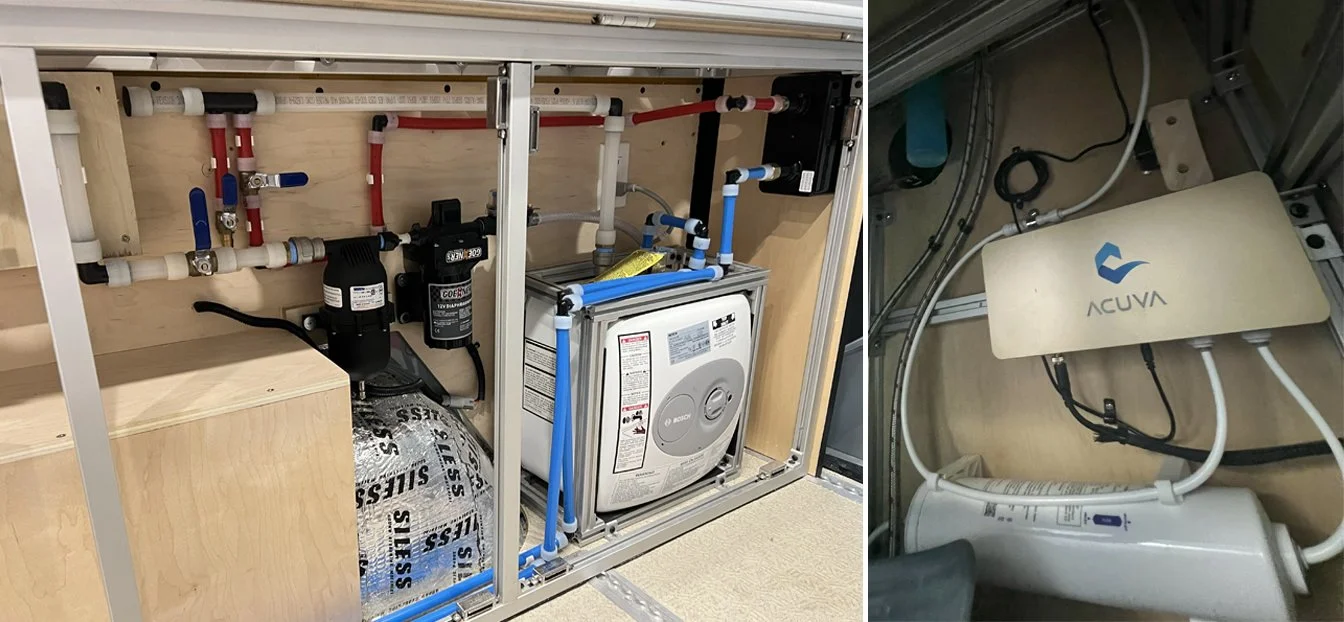
A camper van bathroom isn’t one thing. It’s an entire water and infrastructure system that includes:
Fresh and gray water tanks
Pumps and accumulators
Plumbing runs (we use Uponor for durability across climates)
Waterproofing and sealing
Ventilation
Drainage and dumping hardware
Often, under-van tank placement and motorized ball valves
That complexity is why bathrooms move budgets more than most people expect.
Cost ranges: high level, real world
Costs vary based on layout and expectations, but here’s how they generally shake out.
Fold-away or modular showers
Lower cost
Fewer permanent structures
More flexibility in layout
Less labor and waterproofing
Fully enclosed wet baths
Higher cost
Permanent sealed room
More labor, materials, and testing
Greater impact on layout and storage
Water heaters alone can range from smaller budget-friendly options to premium units like a $1,000 Isotemp system. Each choice affects space, power draw, and overall design.
What a bathroom adds (beyond comfort)
A well-designed bathroom can:
Enable longer off-grid trips
Reduce reliance on campgrounds
Make travel with kids or pets much easier
Increase comfort for full-time or extended travel
But it also:
Reduces usable interior space
Adds weight and system complexity
Requires more planning around tanks and freezing climates
There’s no wrong choice. There’s only the right choice for how you travel.
When a bathroom is worth it
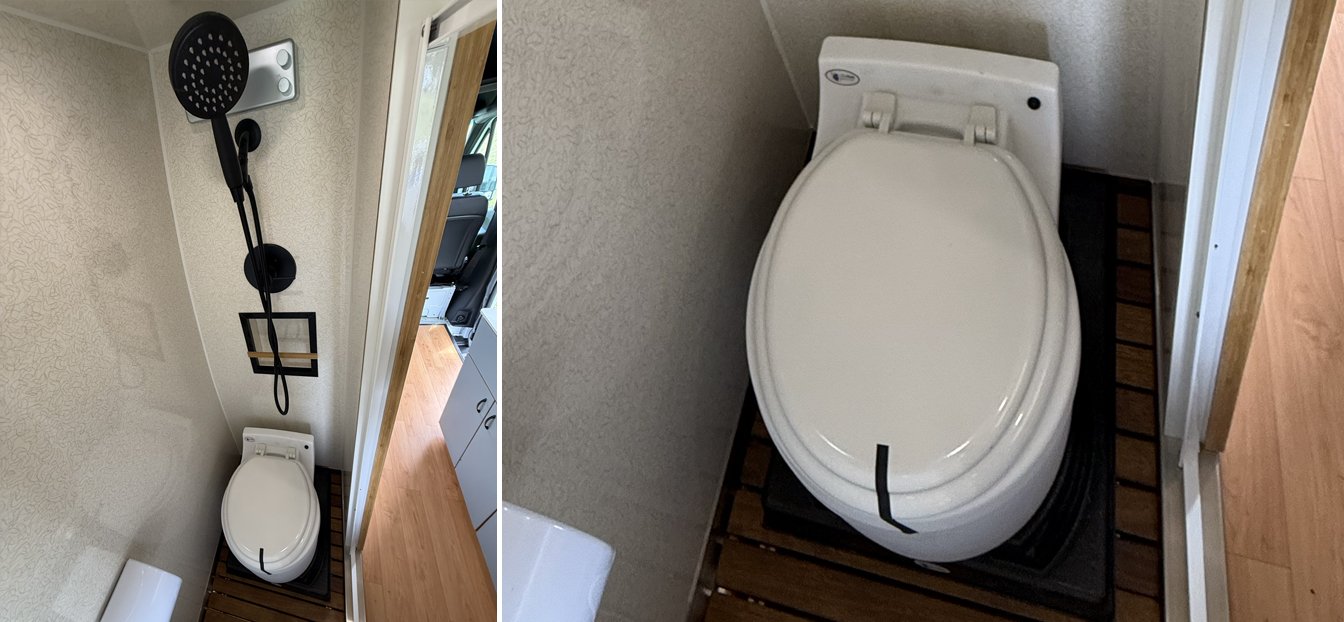
From our experience, bathrooms tend to make sense when:
You’re traveling full-time or for long stretches
You spend time off-grid or boondocking
You value privacy and flexibility over maximum open space
You’re building for long-term ownership
They’re often less critical for weekend travel or short trips where facilities are readily available.
The most common mistake
Treating the bathroom as a late add.
Bathrooms affect layout, tank placement, and systems. Adding one late almost always increases cost and compromises design.
The best builds decide this early and design around it.
Final thought
Bathrooms can be absolutely worth it. They just deserve respect in the planning phase.
If you’re unsure, that’s normal. The goal isn’t to say yes or no right away. It’s to understand the trade-offs before walls go up.